The construction world takes “zero-cracking” seriously. If your paver blocks start to crack, you’re not just losing a batch—you’re probably losing business. Lots of factors go into making a block strong, but none matter more than how much force you apply when molding. Get this wrong, and even the best mix or curing method can’t save you.
If you’re checking out machines from karmyogindia.com, you’ll want to understand just how crucial hydraulic pressure is to the finished product. Here’s what you need to know to keep those blocks flawless, batch after batch.
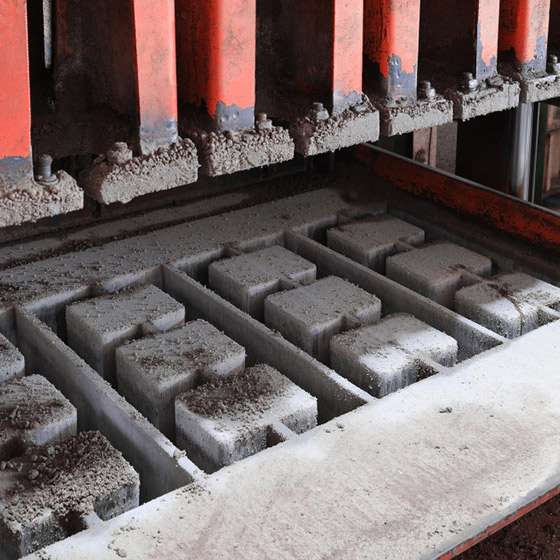
Automatic paver block machines work best when you set the hydraulic pressure between 150 and 200 bar (so, roughly 2175 to 2900 PSI). Think of this as the goldilocks zone—it’s just right. At this pressure, your machine binds the semi-dry mix firmly enough that it squeezes out those sneaky air pockets (“micro-voids”) that tend to cause cracks later. Stay inside this range, and you avoid most internal cracking.
If your machine drops below 150 bar, compaction suffers. The cement can’t properly grip the sand or stone dust, so you end up with blocks that crumble at the edges or form those hairline cracks you really don’t want. Going for a fully automatic KHM-Series machine keeps your pressure locked in, so you’re not rolling the dice with every batch.
Some people say, “if 200 bars is good, maybe 250 is better.” That’s wrong. Push past 220 bar without a dialed-in mold, and you can cause what’s called “rebound”—the material inside the mold gets squashed too hard and, when you release the pressure, it expands too quickly. Suddenly, your block cracks before it’s even left the pallet. Machines like those from Karmyog Hi-Tech Machineries don’t let this happen; they’re set up to stop right at the safe limit, keeping shapes consistent and blocks stress-free.
It’s not just about pressure. Vibro-Press Technology makes a big difference. While 180 bar of pressure compacts from the top, high-frequency vibration settles the mix from the bottom. This makes the block’s density even from top to bottom, so you don’t get weak spots that crack diagonally. Combine 200 bars with strong vibration, and you get blocks that are pretty much unbreakable in real-world use.
Older, manual machines are unpredictable; sometimes they push 160 bars, next minute they drop to 140. That unpredictability leads to cracks. Today’s automatic machines use PLCs (Programmable Logic Controllers) to watch the pressure nonstop. They make sure every block, from the first to the thousandth, gets exactly the same force, so your road-worthy pavers won’t let you down.
India’s heat is brutal—and hot days thin out hydraulic oil, which can make your machine lose pressure. KHM machines come with heavy-duty cylinders and cooling systems that keep pressure steady, even when it’s 45°C outside. That means twelve hours of production and consistent zero-crack quality, no matter the summer.
You need a machine that reliably holds 150 to 200 bar of hydraulic pressure—no less, no guesswork, no wild spikes. Anything else, and you’re risking your pavers and your reputation.
Curious what this looks like for real? Check out the KHM-Series at Karmyog India and find the right fit for your next project. Get the pressure right, and say goodbye to cracks.